




Support CleanTechnica’s work through a Substack subscription or on Stripe.
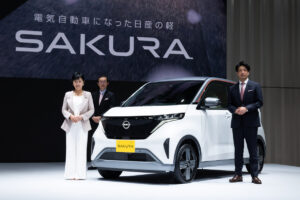
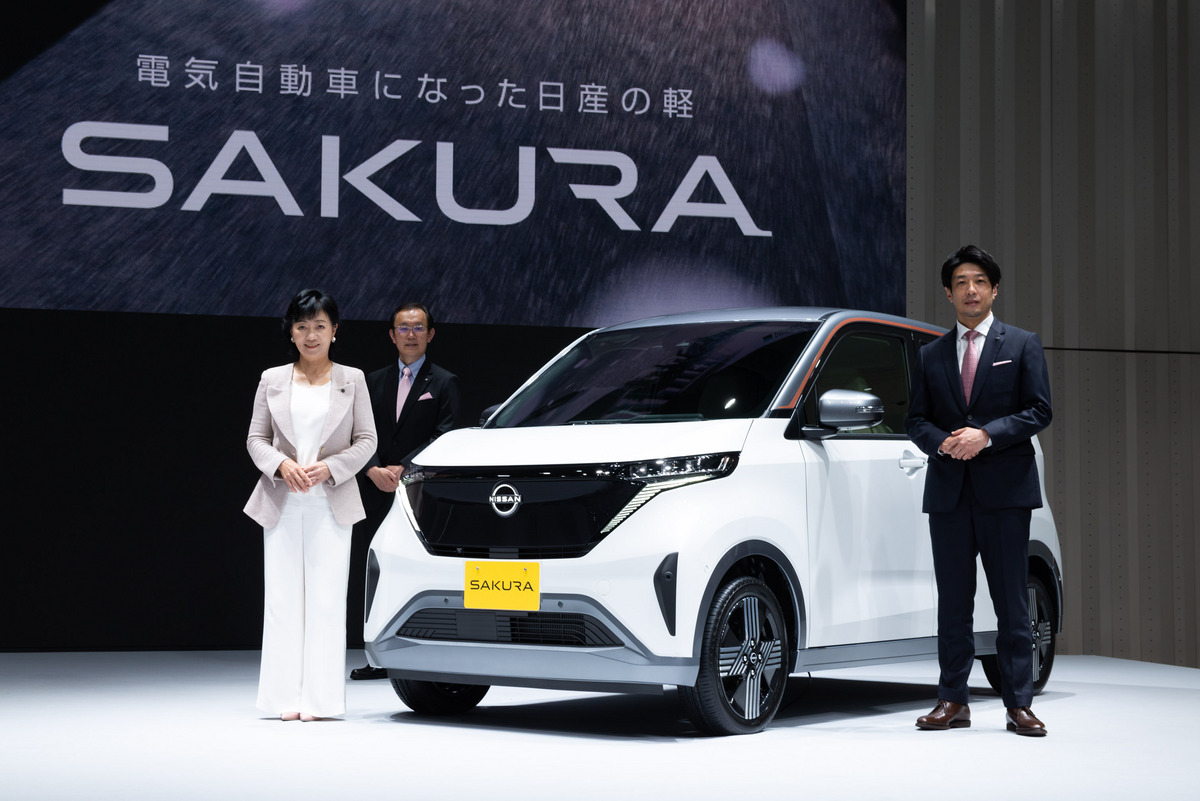
While Tesla and BYD (not in that order) dominate EV headlines globally, Japan’s EV sales success for three consecutive years is a tiny 11-foot-long kei car that costs roughly $14,000 after subsidies and offers just 112 miles of range. The Nissan Sakura has become more than a sales success—it’s arguably kept Nissan afloat during one of the company’s most turbulent periods.
A blossom of numbers
In 2024, Nissan sold 37,140 Sakuras in Japan, accounting for nearly half of all EV sales in the country. According to the original 2025 Japan Mobility Show report, in the first half of 2025, Nissan led Japan’s EV segment with 11,695 units sold, capturing 40% of the entire battery electric vehicle market. Tesla following at 5,542 units and BYD at 1,409 units. The Sakura represents the lion’s share of Nissan’s dominance.
Since launching in summer 2022, the Sakura has received over 60,000 orders—demand so overwhelming that Nissan temporarily paused sales in late 2022 to manage production backlogs. In December 2022, the Sakura and its mechanical twin, the Mitsubishi eK X EV, won the Japan Car of the Year and kei car of the year awards.
For a company still recovering from the Carlos Ghosn scandal and years of financial chaos, these numbers represent more than sales—they represent survival. While Nissan pioneered mass-market EVs with the LEAF over a decade ago, that early advantage evaporated through management turmoil and strategic drift. The Sakura’s success has given Nissan breathing room, market credibility, and proof it still understands how to build vehicles people actually want.
Precise for Japan
The Sakura succeeds because it was designed with surgical precision for a specific market segment rather than compromised by global platform economics or ambitious performance targets.
Let’s start with the dimensions: 3,395mm long, 1,475mm wide, 1,655mm tall. These aren’t arbitrary—they’re the exact maximum specifications for Japan’s kei car category, which provides significant tax advantages and parking benefits. Kei cars represent over a third of all new vehicle sales in Japan, making this the country’s most important automotive segment.
Despite tight packaging, the Sakura offers surprising interior space. A 2,495mm wheelbase—nearly equal to the larger Nissan Note—maximizes legroom. The tall, upright kei car design provides generous headroom. There’s actual space inside, not the cramped penalty box exterior dimensions suggest.
The powertrain reflects similar pragmatism. A 47-kilowatt motor produces 63 horsepower and 195 newton-meters of torque. By global standards these figures sound modest, but the Sakura weighs just 1,080 kilograms, and it operates primarily in dense urban traffic where instant electric torque matters more than sustained high-speed power. The top speed reaches 130 km/h—adequate when most driving occurs at 40 km/h in congested streets.
The 20-kilowatt-hour battery provides 180 kilometers of range on Japan’s WLTC test cycle. Real-world range falls shorter, especially with climate control during Tokyo’s sweltering summers or frigid winters. But here’s where understanding actual usage patterns matters: Nissan surveys show 53% of kei car drivers cover only 30 kilometers daily. Another 31% drive between 30 and 100 kilometers. Just 16% exceed 100 kilometers per day.
For the target customer, 180 kilometers isn’t a compromise—it’s perfectly adequate. The modest battery size creates an unexpected advantage: 30-kilowatt DC fast charging replenishes from 20% to 80% in approximately 40 minutes. Full overnight charging using standard 2.9-kilowatt AC takes about eight hours. These are realistic, livable numbers for urban drivers with predictable routines.
Premium but budget
The Sakura is the premium economy of kei EVs. Slim, triple-beam projector LED headlights echo the premium Ariya crossover. Aluminum wheels feature designs inspired by mizuhiki, traditional Japanese gift-wrapping knots. The illuminated charging port facilitates nighttime charging. Customers choose from 15 body colors, including four two-tone options evoking seasonal transitions.
Inside, a 7-inch digital cluster pairs with a 9-inch infotainment screen. Nissan’s ProPilot driver assistance system comes standard, providing adaptive cruise control and lane-keeping. ProPilot Park automated parking handles steering, acceleration, braking, and gear shifting—particularly valuable in tight Japanese parking situations.
Three trim levels serve different needs. The base S targets commercial and fleet buyers with simplified equipment. The mid-range X adds comfort features for private buyers. The top G specification includes adaptive LED headlights, comprehensive driver assistance, and premium materials. This tiered approach lets Nissan serve price-sensitive commercial customers while offering versions for discerning private buyers.
The Sakura’s dominance reveals what foreign automakers get wrong about Japan. Tesla, despite strong brand cachet, sold fewer than half the EVs Nissan did in H1 2025. BYD’s aggressive pricing and impressive technology barely registered with Japanese consumers.
The formula competitors can’t easily replicate starts with kei car regulations. Design from scratch to maximize these constraints, and you optimize for what Japanese buyers need. Adapt a global platform, and you compromise everywhere that matters locally.
Pricing below 1.8 million yen after subsidies positions the Sakura within reach of buyers who might otherwise purchase conventional kei cars from Suzuki, Daihatsu, or Honda. Development partnership with Mitsubishi spreads costs across higher volumes through shared components and manufacturing—a collaboration that emerged from Nissan’s earlier financial rescue of Mitsubishi following fuel economy testing scandals.
Nissan’s extensive dealer network provides local sales and service infrastructure that foreign brands can’t match. When something breaks on your $14,000 EV, you want a nearby service center staffed by technicians who understand the vehicle. Nissan delivers this; Tesla and BYD still struggle in Japan, despite a good, but concentrated presence.


Electric transfusion
The Sakura embodies Nissan’s Re:Nissan strategy, which emerged as the company recovered from Ghosn-era chaos. The strategy emphasizes innovative products addressing real customer pain points rather than chasing technology for its own sake or pursuing market segments where Nissan lacks advantage.
The Sakura’s commercial success has bought Nissan something precious: time. Time to restructure operations, develop next-generation products, and rebuild brand reputation for reliability and innovation. While competitors stumble through EV transitions posting losses on every unit sold, Nissan has found a profitable formula in the world’s third-largest economy.
Japan remains critically important despite Nissan’s global footprint. It’s not just a major market but a technology testbed where innovations can be proven before international expansion. Success in Japan lends credibility for expansion to other Asian markets where Japanese automotive brands maintain strong reputations.
Most importantly, the Sakura demonstrates that EV success doesn’t require reinventing transportation. It requires understanding transportation as it actually exists—congested cities, tight budgets, predictable short-distance routines, and customers who value reliability over revolution.
Global automakers often approach EVs as opportunities to showcase technology, justify premium pricing, and attract early adopters willing to tolerate inconvenience for environmental credentials. The Sakura took the opposite approach: make an EV so practical, affordable, and well-suited to daily reality that customers choose it not despite being electric, but because being electric makes their lives easier.
No charging anxiety when driving 30 kilometers daily with 180 kilometers of range. No range compromises for short urban trips. No premium pricing penalty when development costs are shared and components are right-sized. No infrastructure challenges when overnight home charging easily replenishes the modest battery.
Nissan already showcased its solar charging technology for the Sakura at the 2025 Japan Mobility Show, the vehicle’s existing success validates the foundation. You can only complete an ecosystem if the core product already works brilliantly.
Sometimes the most important automotive innovations aren’t the flashiest. Sometimes they’re small electric kei cars that do exactly what they’re supposed to do, exactly when a troubled automaker needed them most.


Sign up for CleanTechnica’s Weekly Substack for Zach and Scott’s in-depth analyses and high level summaries, sign up for our daily newsletter, and follow us on Google News!
Have a tip for CleanTechnica? Want to advertise? Want to suggest a guest for our CleanTech Talk podcast? Contact us here.
Sign up for our daily newsletter for 15 new cleantech stories a day. Or sign up for our weekly one on top stories of the week if daily is too frequent.

CleanTechnica uses affiliate links. See our policy here.
CleanTechnica’s Comment Policy